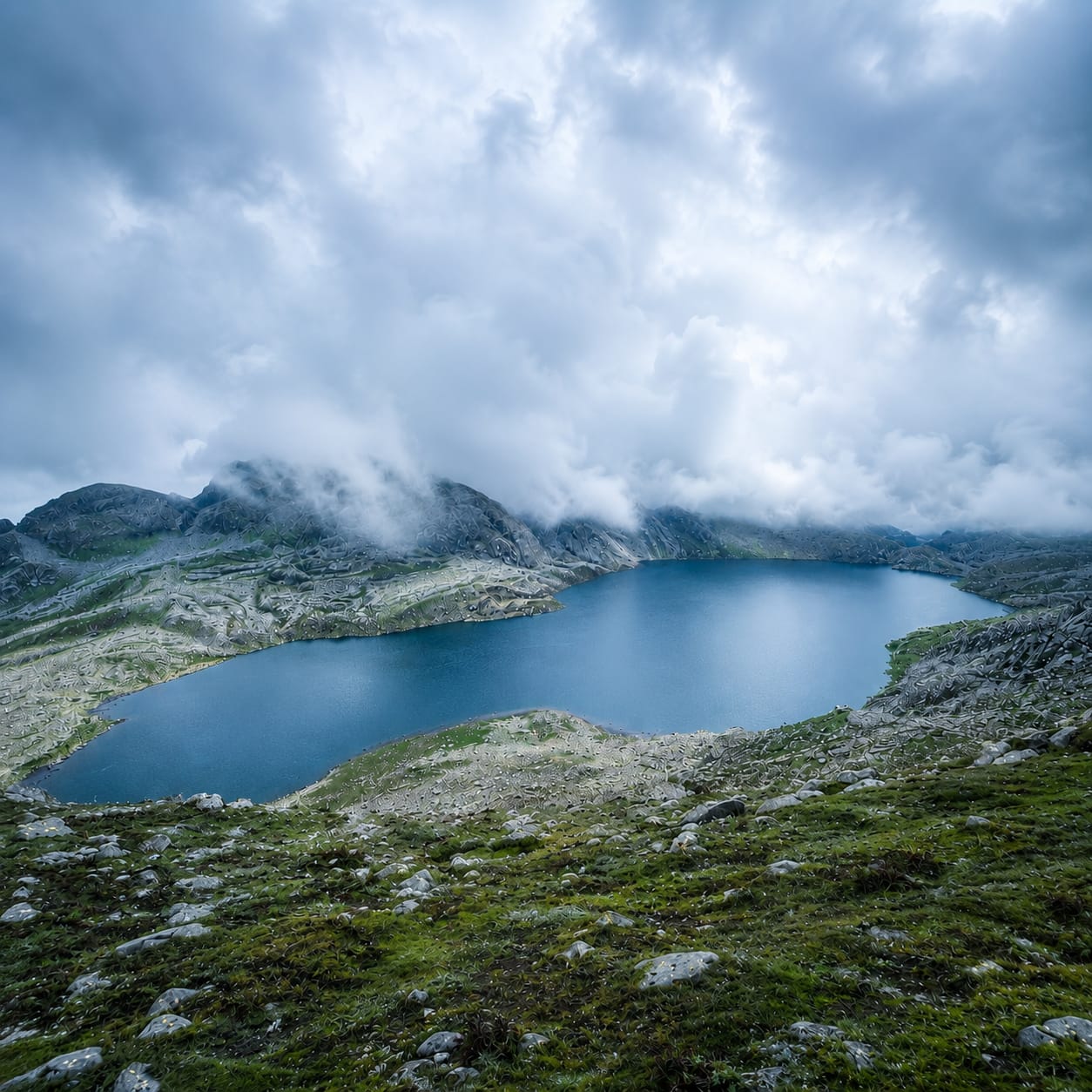
🌱 A Hidden Alpine Gem
Baghsar Lake is a breathtaking high-altitude alpine water body nestled deep within the Pir Panjal range of Jammu and Kashmir's Poonch district. Resting at an elevation of approximately 3,700 metres (12,140 feet) above sea level, it holds the distinction of being the third-largest alpine lake in the region. The lake is characterized by its crystal-clear, deep blue waters that mirror the surrounding jagged mountain peaks, creating a serene and untouched landscape that remains largely insulated from heavy commercial tourism.
❤️ The Heart of the Seven Lakes Circuit
For adventure enthusiasts, the lake serves as a crown jewel along the famous Seven Lakes Trek, a challenging multi-day circuit that connects Poonch with the neighbouring Rajouri and Shopian districts. The trail leading to Baghsar is a visual spectacle, winding through dense coniferous forests, expansive meadows carpeted with wild alpine flowers, and rugged, rocky mountain passes. It sits in close proximity to other magnificent glacial lakes, such as Nandan Sar and Chandan Sar, making the grueling trek a deeply rewarding experience for seasoned hikers.
🏔️ Seasonal Transformation and Accessibility
The appearance of Baghsar Lake changes dramatically with the seasons, offering a completely different experience depending on when it is visited. During the winter and early spring months, the lake remains completely frozen and buried under a thick blanket of snow. By mid-June, the ice melts away, opening up a brief, vibrant window until September where the pastures turn lush green and the water becomes accessible to trekkers. Due to its remote location near the Line of Control and the absence of permanent human settlements, visiting the lake requires meticulous planning, self-sufficient camping gear, and local guidance.